
Spring Lawn Care Checklist: Aeration, Overseeding & More for South Shore MA
Spring’s finally here in South Shore Massachusetts, and if you’re like most homeowners in Easton, Brockton, or Stoughton, you’re probably looking at your lawn thinking “where do I even start?” Don’t worry – we’ve been helping South Shore residents get their lawns ready for growing season for years, and we’ve got you covered with this comprehensive spring lawn care guide.
Why Spring Lawn Care Matters in South Shore Massachusetts
Our New England winters can be pretty tough on lawns. Between the freeze-thaw cycles, snow mold, and general winter stress, most South Shore lawns need some serious TLC come spring. The good news? With the right approach to spring lawn care, you can have your neighbors asking for your secret by summer.
Step 1: Clean Up Winter Debris
Before you do anything else, you’ll want to get all that winter debris off your lawn. We’re talking fallen branches, leftover leaves that didn’t get cleaned up in fall, and any other junk that accumulated over winter. This spring cleaning step is crucial because debris can block sunlight and air circulation, preventing your grass from getting the resources it needs to wake up from winter dormancy.
Walk around your property and pick up any sticks, stones, or other debris. If you’ve got a lot of leaves still hanging around, now’s the time to rake them up. Don’t just blow them into your garden beds though – decomposing leaves can create perfect conditions for disease and pest problems.
Step 2: Assess Winter Damage
Take a good look at your lawn and note any areas that look particularly rough. Common winter damage in South Shore Massachusetts includes:
•Brown or dead patches from snow mold
•Bare spots where foot traffic or snow removal damaged the grass
•Areas where salt from winter road treatments may have caused damage
•Compacted soil from heavy snow or equipment
Make note of these problem areas because they’ll need special attention during your spring lawn care routine.
Step 3: Soil Testing and Amendment
Here’s something most homeowners skip, but it’s really important for South Shore lawns: soil testing. Our local soil tends to be on the acidic side, and after a long winter, nutrient levels can be pretty depleted.
You can pick up a basic soil test kit at any garden center, or better yet, contact your local extension office for a more comprehensive analysis. What you’re looking for is pH level (should be between 6.0-7.0 for most grasses) and nutrient content.
If your soil is too acidic (which is common around here), you’ll want to apply lime. If it’s lacking nutrients, a good organic fertilizer can help get things back on track.
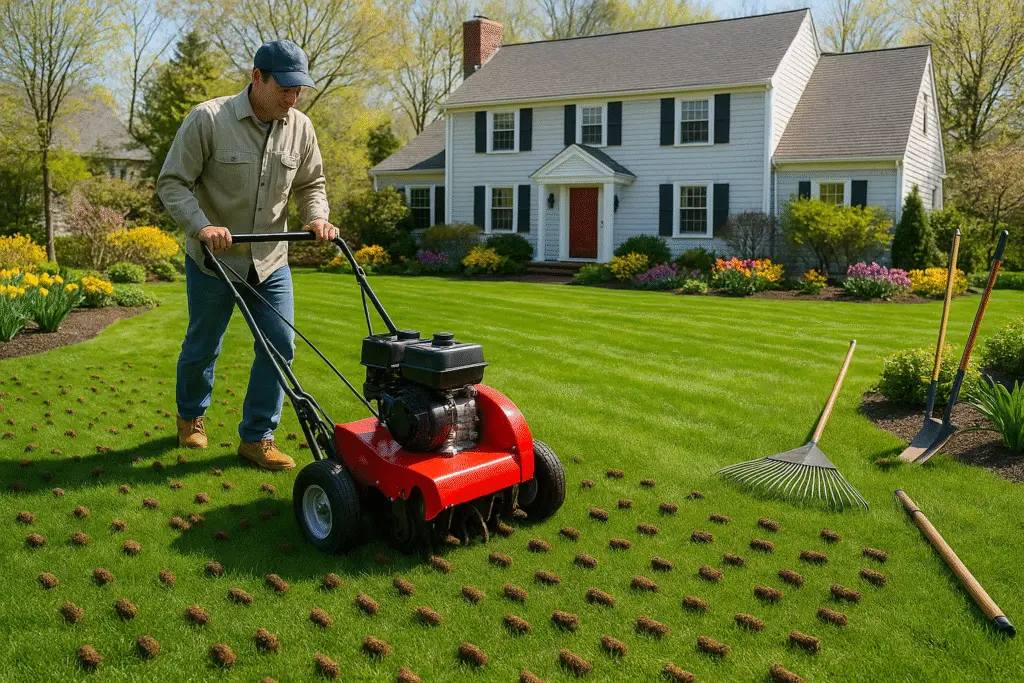
Step 4: Aeration and Overseeding – The Game Changers
Now we’re getting to the really important stuff. Aeration and overseeding are probably the two most effective things you can do for your South Shore lawn in spring.
Why Aeration Matters
Our clay-heavy soil in South Shore Massachusetts gets compacted easily, especially after winter. Compacted soil prevents water, air, and nutrients from reaching grass roots. Professional aeration creates small holes throughout your lawn, allowing these essential elements to penetrate the soil.
You’ll know your lawn needs aeration if:
•Water pools on the surface instead of soaking in
•The soil feels hard and difficult to penetrate
•Your grass looks thin or stressed despite adequate watering
•You have heavy foot traffic areas that look worn
The Overseeding Process
Overseeding introduces new grass varieties to your existing lawn, filling in thin spots and improving overall density. For South Shore Massachusetts, we typically recommend cool-season grass blends that include tall fescue, fine fescue, and perennial ryegrass.
The best time for aeration and overseeding in our area is actually fall, but spring can work too if you missed the fall window. Just be aware that spring-seeded grass will need extra attention during the hot summer months.
Step 5: Fertilizing Your South Shore Lawn
Spring fertilizing gives your grass the nutrients it needs to recover from winter and start growing vigorously. But here’s the thing – timing matters a lot.
Don’t rush to fertilize too early. Wait until you’ve mowed your lawn at least twice and soil temperatures are consistently above 55 degrees. In South Shore Massachusetts, this usually happens sometime in late April or early May.
Look for a fertilizer with a good balance of nitrogen, phosphorus, and potassium. Slow-release formulations work best because they provide steady nutrition over several months rather than a quick burst that can actually stress your grass.
Step 6: Proper Mowing Techniques
Your first mow of the season sets the tone for the entire growing season. Here are some key points for spring mowing in South Shore Massachusetts:
•Don’t cut too short on the first mow. Remove no more than one-third of the grass height
•Make sure your mower blades are sharp. Dull blades tear grass rather than cutting cleanly, which can lead to disease problems
•Vary your mowing pattern to prevent soil compaction and encourage upright growth
For most grass types in our area, maintaining a height of 2.5-3 inches works well. Taller grass develops deeper roots and handles summer stress better.
Step 7: Addressing Problem Areas
Remember those damaged areas you identified earlier? Now’s the time to address them.
For small bare spots, you can overseed directly. For larger areas, you might need to do some soil preparation first. Remove any dead grass, loosen the soil, and add some compost before seeding.
Salt-damaged areas near driveways and walkways might need extra attention. Flush these areas with water to dilute salt concentrations, then overseed with salt-tolerant grass varieties.
Step 8: Watering Wisdom
Spring watering in South Shore Massachusetts can be tricky. We often get plenty of natural rainfall, but dry spells can happen too.
The key is deep, infrequent watering rather than light, frequent watering. This encourages deep root development, which helps your lawn handle summer stress better.
If you’re overseeding, you’ll need to keep the soil consistently moist until the new grass establishes. This might mean light, frequent watering for the first few weeks, then transitioning to deeper, less frequent watering.
Step 9: Weed Prevention
Spring is prime time for weed prevention. Pre-emergent herbicides can prevent crabgrass and other annual weeds from germinating, but timing is crucial.
Apply pre-emergent when soil temperatures reach about 50-55 degrees consistently. In South Shore Massachusetts, this usually happens in mid to late April.
Keep in mind that pre-emergent herbicides can also prevent grass seed from germinating, so if you’re planning to overseed, you’ll need to choose one or the other.
Step 10: Professional Help When You Need It
Look, we get it – spring lawn care can feel overwhelming, especially when you’re dealing with South Shore Massachusetts’ unique challenges like our clay soil and unpredictable spring weather.
If you’re feeling overwhelmed or just don’t have the time to tackle everything, that’s where professional lawn care services come in. A good landscaping company can handle the technical stuff like soil testing, aeration, and proper fertilization while you focus on enjoying your outdoor space.
Common Spring Lawn Care Mistakes to Avoid
Before we wrap up, let’s talk about some common mistakes we see homeowners make with spring lawn care:
Starting Too Early: We know you’re excited to get outside, but working on wet, muddy soil can cause more harm than good. Wait until the soil is firm enough to walk on without leaving footprints.
Over-Fertilizing: More isn’t always better when it comes to fertilizer. Too much nitrogen can actually make your grass more susceptible to disease and insect problems.
Ignoring Soil Compaction: If your soil is compacted, all the fertilizer and water in the world won’t help much. Address compaction issues first.
Cutting Too Short: Scalping your lawn might make it look neat initially, but it weakens the grass and makes it more susceptible to weeds and disease.
Timeline for South Shore Massachusetts
Here’s a rough timeline for spring lawn care in our area:
Early March: Start planning and gathering supplies Late March/Early April: Begin cleanup and damage assessment Mid-April: Soil testing and amendment Late April/Early May: Aeration, overseeding, and fertilizing May: Begin regular mowing and watering routine
Remember, these dates can vary depending on weather conditions. Use soil temperature and grass growth as your guide rather than calendar dates.
Wrapping Up Your Spring Lawn Care
Getting your South Shore Massachusetts lawn ready for the growing season doesn’t have to be complicated, but it does require some planning and effort. Focus on the basics – cleanup, soil health, aeration, and proper fertilization – and you’ll be well on your way to a lawn that’s the envy of the neighborhood.
The key is consistency and patience. Lawn care is a marathon, not a sprint. With proper spring preparation and ongoing maintenance throughout the growing season, you’ll have a thick, healthy lawn that can handle whatever New England weather throws at it.
Whether you tackle these tasks yourself or work with a professional landscaping service, the important thing is getting started. Your lawn (and your neighbors) will thank you come summer.