
Complete Fall Cleanup Guide: Preparing Your South Shore MA Landscape for Winter
Fall in South Shore Massachusetts is absolutely beautiful – the changing leaves, crisp air, and that perfect sweater weather we all love. But if you’re a homeowner in Easton, Brockton, Stoughton, or anywhere else in our area, you know that fall also means it’s time to start thinking about preparing your landscape for winter.
I know, I know – nobody wants to think about winter when we’re still enjoying those gorgeous October days. But trust me, a little effort now will save you a lot of headaches come spring, and your landscape will thank you for it.
Why Fall Cleanup Matters More Than You Think
Here’s the thing about fall cleanup – it’s not just about making your yard look neat (though that’s nice too). Proper fall preparation actually protects your landscape investment and sets you up for a much easier spring.
In South Shore Massachusetts, we deal with some pretty harsh winter conditions. Heavy snow, ice storms, and those brutal freeze-thaw cycles can really do a number on unprepared landscapes. But with the right fall cleanup routine, you can minimize winter damage and give your plants, lawn, and hardscaping the best chance to emerge healthy in spring.
Plus, there’s something to be said for having a clean, organized outdoor space going into winter. It just feels good knowing everything’s taken care of.
The Ultimate Fall Cleanup Checklist
Let’s break down fall cleanup into manageable tasks. You don’t have to do everything in one weekend – spread it out over a few weeks and tackle things as time and weather permit.
Leaf Removal: More Important Than You Might Think
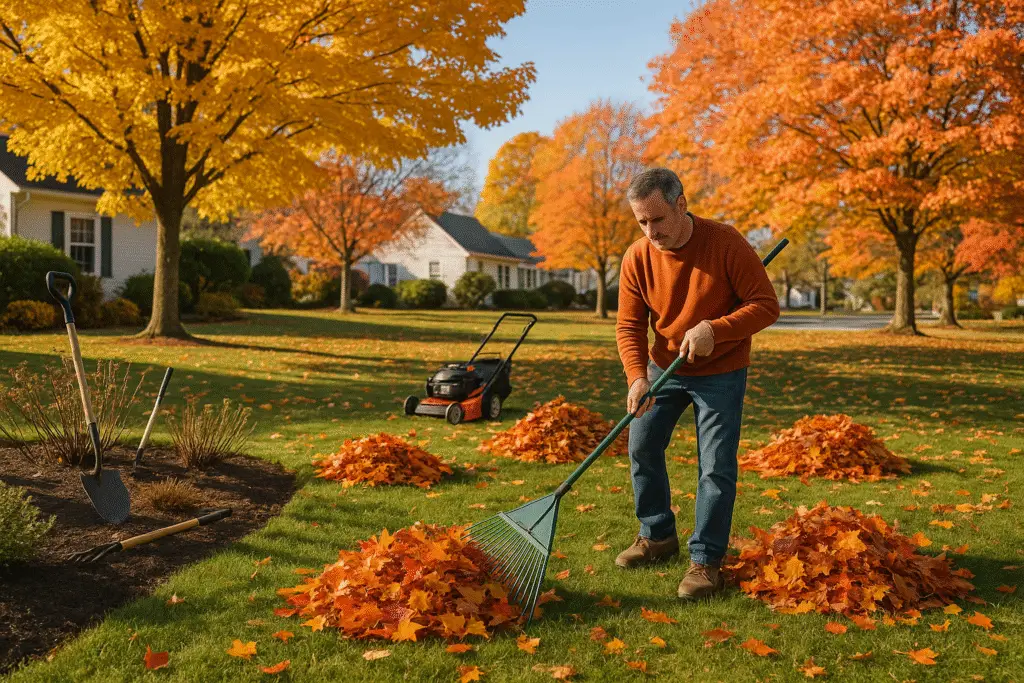
Let’s start with the obvious one – dealing with all those leaves. And wow, do we get a lot of leaves here in South Shore Massachusetts! While a few leaves scattered around can actually be beneficial for your landscape, thick layers of leaves can cause real problems.
Here’s why leaf removal matters:
•Thick leaf layers can smother your grass, leading to dead spots and disease problems
•Wet leaves create perfect conditions for fungal diseases
•Leaves can clog gutters and drainage systems
•Heavy leaf accumulation can damage plants underneath
But here’s a pro tip – you don’t have to bag up every single leaf. Thin layers of leaves can actually benefit your garden beds by providing natural mulch and habitat for beneficial insects. The key is knowing where leaves help and where they hurt.
For your lawn, remove most leaves but don’t stress about getting every single one. A light scattering won’t hurt anything. For garden beds, you can leave some leaves as natural mulch, but remove any that are diseased or from trees like black walnut that can inhibit other plant growth.
Lawn Care: Setting Up for Spring Success
Fall is actually one of the most important times for lawn care, even though your grass is getting ready to go dormant. Here’s what your South Shore Massachusetts lawn needs before winter:
Final Mowing: Keep mowing until your grass stops growing, which usually happens sometime in November around here. For your final mow of the season, cut the grass slightly shorter than usual – about 2 inches instead of the 2.5-3 inches you maintained during summer. This helps prevent snow mold and makes spring cleanup easier.
Aeration and Overseeding: Fall is actually the best time for aeration and overseeding in our area. The cool temperatures and increased moisture create ideal conditions for grass seed germination. If your lawn has thin spots or heavy traffic areas, fall overseeding can make a huge difference.
Fertilization: A fall fertilizer application helps your grass store nutrients for winter and promotes strong root development. Look for a fertilizer specifically designed for fall application – these typically have higher potassium content to help grass handle winter stress.
Weed Control: Fall is a great time to tackle perennial weeds like dandelions. These weeds are storing energy in their roots for winter, so herbicide applications are particularly effective now.
Garden Bed Preparation
Your garden beds need some attention before winter too. Here’s what to focus on:
Perennial Care: Cut back most perennials after they’ve gone dormant, but leave ornamental grasses and plants with interesting seed heads for winter interest. Some perennials, like echinacea and black-eyed Susan, provide food for birds if you leave the seed heads.
Annual Removal: Pull up spent annuals and add them to your compost pile (unless they were diseased – those should go in the trash).
Mulch Application: Apply a fresh layer of mulch around trees, shrubs, and perennial beds. This helps insulate roots from temperature fluctuations and prevents weeds from germinating in spring. Aim for 2-3 inches of mulch, but keep it away from plant stems and tree trunks.
Bulb Planting: If you want spring flowers, fall is the time to plant bulbs. Tulips, daffodils, and crocuses all need a cold period to bloom properly, so get them in the ground before the soil freezes.
Tree and Shrub Care
Your woody plants need some attention before winter too:
Pruning: Fall isn’t the best time for major pruning (that’s better done in late winter), but you can remove dead, damaged, or diseased branches. Also remove any branches that might cause problems if they fall during winter storms.
Watering: Keep watering trees and shrubs until the ground freezes, especially newly planted ones. Plants need moisture going into winter, and our fall weather can be surprisingly dry some years.
Protection: Young or tender plants might need winter protection. Burlap wraps can protect evergreens from winter wind and sun, while tree guards can prevent rodent damage.
Hardscaping and Infrastructure
Don’t forget about your hardscaping elements and outdoor infrastructure:
Gutter Cleaning: Clean gutters and downspouts to ensure proper drainage. Clogged gutters can cause ice dams and water damage to your home.
Irrigation Systems: If you have an irrigation system, it needs to be properly winterized to prevent freeze damage. This usually involves draining all water from the lines and shutting off the water supply.
Outdoor Furniture: Clean and store outdoor furniture, or cover it with appropriate covers. Bring in cushions and any items that could be damaged by winter weather.
Tool Maintenance: Clean and oil your garden tools before storing them for winter. Drain fuel from gas-powered equipment or add fuel stabilizer.
Timing Your Fall Cleanup
In South Shore Massachusetts, fall cleanup typically happens over several weeks from mid-October through November. Here’s a rough timeline:
Early October: Start with basic cleanup – removing spent annuals, light leaf removal, and general tidying.
Mid-October: Focus on major leaf removal, garden bed preparation, and tree/shrub care.
Late October/Early November: Final lawn care tasks, irrigation winterization, and equipment storage.
November: Final leaf removal, last mowing, and any remaining cleanup tasks.
Of course, this timeline can vary depending on weather conditions. Some years we get early snow, other years we’re still doing yard work in December. Use the condition of your plants and the weather forecast as your guide.
Common Fall Cleanup Mistakes
Let me share some mistakes I see homeowners make during fall cleanup:
Cutting Back Too Early: Don’t rush to cut back perennials while they’re still green. Let them go through their natural dormancy process first.
Over-Mulching: More mulch isn’t always better. Too much mulch can create problems with moisture retention and pest habitat.
Ignoring Drainage: Fall is a great time to address drainage problems before they become bigger issues in spring.
Forgetting About Wildlife: Consider leaving some areas “messy” for wildlife habitat. Brush piles, seed heads, and leaf litter provide important winter habitat for beneficial insects and birds.
Working in Poor Conditions: Don’t try to do cleanup work when the ground is muddy or plants are wet. You can cause more damage than good.
When to Call in the Professionals
Look, I get it – fall cleanup can be overwhelming, especially if you’ve got a large property or limited time. There’s no shame in getting help with some or all of these tasks.
Professional landscaping services can handle the heavy lifting (literally) while ensuring everything gets done properly. This is particularly valuable for tasks like:
•Large-scale leaf removal
•Tree and shrub pruning
•Irrigation system winterization
•Equipment maintenance and storage
Plus, professionals have the right tools and experience to work efficiently and safely.
Preparing for Snow Removal
Since we’re talking about winter preparation, now’s also a good time to think about snow removal. If you’re planning to hire a snow removal service, fall is when most companies are booking clients for the winter season.
If you handle snow removal yourself, make sure your equipment is ready to go. Service your snow blower, check your shovels, and stock up on ice melt (but choose products that won’t damage your landscape).
The Payoff of Good Fall Cleanup
I know fall cleanup can feel like a lot of work, but the payoff is worth it. Come spring, you’ll have:
•A healthier lawn that greens up faster
•Garden beds that are ready for new plantings
•Less cleanup work when you’re eager to get outside
•Reduced risk of pest and disease problems
•A landscape that looks great even in winter
Making It Manageable
The key to successful fall cleanup is breaking it down into manageable chunks. You don’t have to do everything in one weekend. Pick a few tasks each weekend, and before you know it, everything will be done.
Also, don’t feel like you have to do everything yourself. Get the family involved – kids can help with leaf raking and light cleanup tasks. It’s actually a great way to spend time outdoors together during the beautiful fall weather.
Looking Ahead to Spring
As you’re doing your fall cleanup, take notes about things you want to change or improve next year. Maybe you noticed areas where drainage could be better, or spots where you’d like to add new plantings. Fall cleanup is a great time to really observe your landscape and plan for future improvements.
Wrapping Up Your Fall Cleanup
Fall cleanup might not be the most exciting part of homeownership, but it’s one of the most important things you can do for your landscape. With a little effort now, you’ll protect your investment, reduce spring workload, and ensure your South Shore Massachusetts property looks great year-round.
Remember, the goal isn’t perfection – it’s preparation. Focus on the tasks that will make the biggest difference for your specific property and situation. Your landscape (and your future self) will thank you when spring rolls around.
Whether you tackle everything yourself or get help from professionals, the important thing is getting it done. So grab a rake, put on your favorite fall sweater, and get out there. Your yard is waiting for you.